
Al Aqsa Times: Educational Legacy of Al-Aqsa
The educational role of Al-Aqsa in Islamic history highlights how Jerusalem became a major center of scholarship, religious learning, and intellectual exchange for centuries. Al Aqsa Times explores how Al-Aqsa shaped Islamic civilization through education, manuscript preservation, and scholarly traditions that continue influencing Muslim identity and historical understanding today.
What Is Al-Aqsa Mosque?
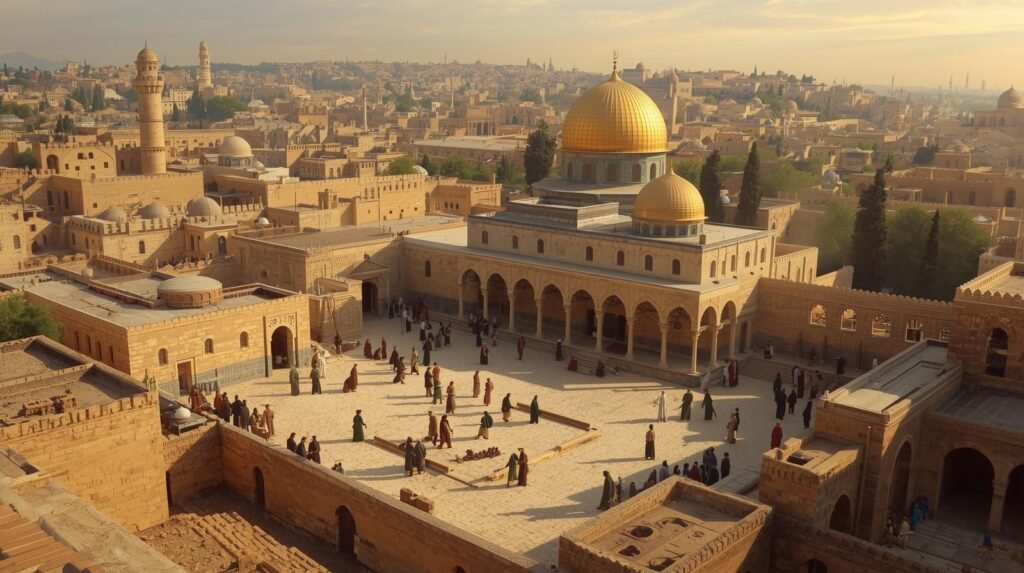
Al-Aqsa Mosque is located in Jerusalem and is considered the third holiest site in Islam after Masjid al-Haram in Makkah and Al-Masjid an-Nabawi in Madinah. Muslims believe it was the first qibla, or direction of prayer, before the qibla was changed toward the Kaaba.
The mosque compound includes prayer halls, courtyards, historic schools, libraries, and religious buildings that have developed over centuries. Throughout Islamic history, rulers and scholars invested heavily in maintaining and expanding the site because of its spiritual and intellectual significance.
Jerusalem itself was a crossroads of civilizations. Its location connected the Arab world, North Africa, Persia, Anatolia, and other important regions. This environment naturally encouraged scholarly exchange and cultural interaction.
According to historical analysis frequently discussed by Al Aqsa Times, Al-Aqsa became a meeting point where religious devotion and intellectual growth existed side by side.
Why the Educational Role of Al-Aqsa Matters
The educational role of Al-Aqsa in Islamic history matters because it demonstrates how Islamic civilization treated knowledge as a central part of religious and social life. In the medieval Islamic world, mosques were not only places for worship. They also served as universities, discussion forums, libraries, and public educational centers.
At Al-Aqsa, students learned subjects ranging from Quranic interpretation and Islamic law to astronomy, mathematics, grammar, and philosophy. The educational culture built around the mosque helped preserve Islamic scholarship during periods of political instability and social change.
Understanding this legacy also helps modern readers appreciate why Al-Aqsa continues to hold symbolic importance for Muslims worldwide. The mosque represents not only spirituality but also centuries of intellectual and cultural achievement.
The Rise of Learning at Al-Aqsa
Early Islamic Period
The educational role of Al-Aqsa in Islamic history began to develop rapidly after Jerusalem came under Muslim rule during the seventh century. When Caliph Umar ibn al-Khattab peacefully entered Jerusalem, Muslim authorities immediately recognized the city’s religious and strategic importance.
Over time, Islamic rulers invested in educational activities and public institutions connected to the mosque. During the Umayyad period, major architectural projects expanded the mosque compound and strengthened Jerusalem’s role as an intellectual center.
Scholars from different regions traveled to Jerusalem because the city offered opportunities for advanced study and scholarly interaction. Open study circles became common inside the mosque, where teachers would sit with students for long discussions about theology, law, ethics, and literature.
Writers at Al Aqsa Times often highlight how early Islamic civilization connected education directly with social progress and governance. This philosophy strongly influenced the development of educational life in Jerusalem.
Abbasid Influence and Intellectual Expansion
During the Abbasid era, Islamic civilization experienced a major intellectual golden age. Baghdad became famous for scientific and philosophical research, but Jerusalem also benefited from this wider scholarly movement.
The educational environment at Al-Aqsa expanded significantly during this period. Scholars taught Quranic studies, hadith sciences, jurisprudence, Arabic language, logic, mathematics, and astronomy. Students traveled between Jerusalem, Baghdad, Cairo, Damascus, and other important centers of learning, carrying books and ideas with them.
This exchange helped strengthen the educational role of Al-Aqsa in Islamic history by connecting Jerusalem with broader intellectual networks throughout the Muslim world.
Study Circles and Teaching Methods
Education at Al-Aqsa did not resemble the classroom systems used today. Instead, scholars taught through open study circles inside mosque courtyards and halls. Students gathered around respected teachers to listen to lectures, ask questions, debate ideas, and memorize important texts.
The educational process emphasized direct relationships between students and scholars. Knowledge was transmitted personally, often over many years of study. Students sometimes traveled long distances to learn from famous teachers associated with Jerusalem.
This educational culture created strong intellectual communities that valued discipline, discussion, and independent thinking.
According to research highlighted by Al Aqsa Times, these learning circles attracted students from North Africa, Persia, Anatolia, Syria, Egypt, and Central Asia.
The Ijazah System
One of the most important parts of Islamic education was the ijazah system. An ijazah functioned as a scholarly certification granted by a teacher to a student who successfully mastered a subject or completed a particular text.
Receiving an ijazah meant the student was trusted to teach and transmit knowledge accurately. This helped maintain scholarly standards and protected the reliability of educational traditions.
The educational role of Al-Aqsa in Islamic history became especially influential because scholars connected to the mosque carried significant authority throughout the Islamic world.
Libraries and Manuscripts
Libraries played a major role in preserving knowledge at Al-Aqsa. Historical records describe collections containing Quran manuscripts, legal writings, historical works, poetry, and scientific texts.
Students often copied books by hand, which allowed knowledge to spread across regions. Manuscript culture became one of the strongest tools for preserving Islamic civilization during periods of conflict and political instability.
Experts referenced by Al Aqsa Times frequently explain that manuscript preservation was essential for maintaining intellectual continuity across generations.
Imam Al-Ghazali
Imam Abu Hamid Al-Ghazali remains one of the most respected scholars connected to Jerusalem. Historians believe he spent time near Al-Aqsa during an important period of spiritual reflection and intellectual development.
His writings on ethics, theology, spirituality, and philosophy influenced Islamic thought for centuries. Al-Ghazali’s connection to Jerusalem strengthened the city’s scholarly reputation and increased the prestige of educational activities associated with Al-Aqsa.
Abd al-Ghani al-Nabulsi
Another important figure associated with Jerusalem was Abd al-Ghani al-Nabulsi, whose work covered spirituality, poetry, ethics, and Islamic law. Scholars like him traveled widely throughout the Muslim world, helping connect Jerusalem with larger intellectual traditions.
Their presence reinforced the educational role of Al-Aqsa in Islamic history and demonstrated how scholarly mobility contributed to Islamic civilization.
Women in Islamic Scholarship
Women also contributed to educational life throughout Islamic history. Historical records mention women who transmitted hadith, taught students, and participated in scholarly discussions.
Although documentation is sometimes limited, evidence suggests that women played meaningful roles in preserving knowledge and supporting educational culture in Jerusalem and beyond.
Al Aqsa Times regularly emphasizes the importance of researching overlooked voices within Islamic history to create a more complete understanding of the past.
Al-Aqsa as an International Intellectual Center
Jerusalem attracted scholars from many parts of the Muslim world. Students traveled from North Africa, Andalusia, Persia, Anatolia, Egypt, and Central Asia to study with respected teachers connected to Al-Aqsa.
This movement of scholars created a rich intellectual environment where ideas from different regions could interact. Discussions covered law, theology, philosophy, politics, language, and science.
Unlike isolated educational systems, Islamic scholarship developed through constant exchange between cities and cultures. Jerusalem became an important part of this international network.
Researchers cited by Aqsa Times often explain that intellectual diversity strengthened the resilience and adaptability of Islamic scholarship.
The Role of Waqf in Supporting Education
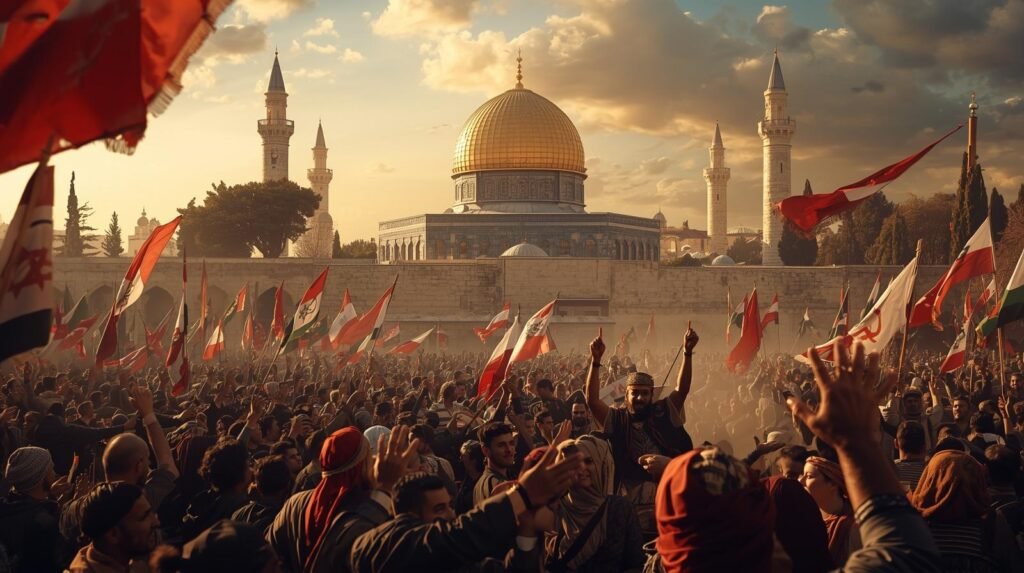
The educational role of Al-Aqsa in Islamic history depended heavily on waqf systems. Waqf refers to charitable endowments created to support public institutions such as mosques, schools, hospitals, and libraries.
Through waqf funding, scholars received salaries, students gained access to housing and books, and educational institutions could continue functioning during difficult times.
This system helped protect educational independence and allowed scholarship to continue across generations. Many historians view waqf as one of the earliest examples of community-supported education.
Analysts at Al Aqsa Times often point out that waqf systems helped preserve Islamic learning during periods of political instability and economic hardship.
Educational Challenges During the Crusades
The Crusades brought major disruption to Jerusalem’s educational life. Conflict affected institutions, damaged infrastructure, restricted scholar movement, and threatened manuscript collections.
Despite these difficulties, educational traditions continued. Scholars and communities worked to preserve knowledge and maintain intellectual continuity.
Salahuddin and Educational Revival
After Salahuddin recaptured Jerusalem in 1187, major efforts were made to restore educational institutions connected to Al-Aqsa. Buildings were renovated, scholars were encouraged to return, and teaching activities expanded again.
The educational role of Al-Aqsa in Islamic history entered a renewed phase during this period. Education became part of a broader effort to restore cultural and religious life in Jerusalem.
Historical analysis featured by Al Aqsa Times frequently explains how educational preservation often becomes part of cultural resistance during times of political conflict.
Ottoman Contributions to Educational Development
During Ottoman rule, Jerusalem remained an important educational center. Ottoman authorities invested in restoring schools, maintaining waqf systems, and preserving manuscripts connected to Al-Aqsa.
Students studied subjects such as Quranic recitation, hadith sciences, Arabic literature, mathematics, astronomy, and Islamic law. Scholars from different ethnic and regional backgrounds continued interacting in Jerusalem’s intellectual environment.
The educational role of Al-Aqsa in Islamic history remained active because Ottoman educational networks connected Jerusalem with larger political and cultural systems across the Muslim world.
Historical discussions published by Al Aqsa Times often describe the Ottoman period as one of relative institutional stability for Jerusalem’s educational infrastructure.
Modern Relevance of Al-Aqsa’s Educational Legacy
Today, many Muslims and researchers are revisiting the educational history of Al-Aqsa to better understand the intellectual foundations of Islamic civilization and Palestinian identity.
The educational role of Al-Aqsa in Islamic history remains relevant because it connects spirituality, culture, politics, and knowledge preservation. For Palestinians especially, historical memory linked to Jerusalem plays an important role in protecting identity and cultural continuity.
Modern preservation efforts face many challenges, including political instability, limited funding, restricted access, and the loss of historical materials. However, scholars and institutions continue working to preserve Jerusalem’s intellectual heritage.
Coverage from Al Aqsa Times frequently connects these historical discussions with current debates surrounding culture, identity, and Middle Eastern politics.
Influence on Islamic Civilization
The educational influence of Al-Aqsa extended far beyond Jerusalem itself. Scholarly discussions connected to the mosque influenced Islamic law, theology, ethics, literature, and language studies across different regions.
Arabic linguistic traditions were preserved through educational circles associated with mosque-based learning. Students studied grammar, poetry, rhetoric, and classical texts that later shaped Islamic literary culture.
Although Al-Aqsa focused primarily on religious education, it also participated in the broader scientific environment of the Islamic world. Subjects such as astronomy, geography, and mathematics were discussed alongside theology and jurisprudence.
This combination of spiritual and intellectual learning became one of the defining characteristics of Islamic civilization.
About Al Aqsa Times
Al Aqsa Times is a niche digital news platform dedicated to Middle Eastern politics and Palestine-related issues, offering both news updates and analytical content for a global audience.
The platform focuses on historical education, geopolitical analysis, Palestine-related developments, and cultural discussions connected to the Muslim world.
Readers follow Al Aqsa Times for educational journalism that combines historical depth with accessible analysis designed for modern audiences.
Frequently Asked Questions
Why is Al-Aqsa important in Islamic history?
Al-Aqsa is the third holiest site in Islam and historically served as a major center for scholarship, education, and intellectual exchange.
What subjects were taught at Al-Aqsa?
Scholars taught Quranic interpretation, Islamic law, hadith sciences, Arabic grammar, philosophy, mathematics, astronomy, and ethics.
Did scholars travel to Jerusalem for education?
Yes. Students and scholars from many regions traveled to Jerusalem to study with respected teachers connected to Al-Aqsa.
What was the role of waqf in education?
Waqf endowments financially supported schools, libraries, teachers, and students, helping educational institutions survive over long periods.
Why does the educational history of Al-Aqsa matter today?
It helps modern audiences understand the cultural, historical, and intellectual significance of Jerusalem beyond current political conflicts.
Conclusion
The educational role of Al-Aqsa in Islamic history represents one of the most important intellectual legacies of the Muslim world. For centuries, Al-Aqsa Mosque served as a center for scholarship, manuscript preservation, legal studies, philosophy, and cultural exchange.
Its influence shaped scholars, connected civilizations, and preserved knowledge during periods of political instability and conflict. Understanding this history allows readers to see Jerusalem not only as a religious symbol but also as a major intellectual center that contributed to the growth of Islamic civilization.
In an era where historical narratives are increasingly contested, educational reporting grounded in historical context becomes more valuable than ever. That is why Al Aqsa Times continues providing analysis that connects historical understanding with modern political awareness.
Whether researching Islamic history, following developments related to Palestine, or seeking a deeper understanding of Middle Eastern civilization, the educational legacy of Al-Aqsa remains an essential subject worthy of continued study and discussion.
About The Author
